
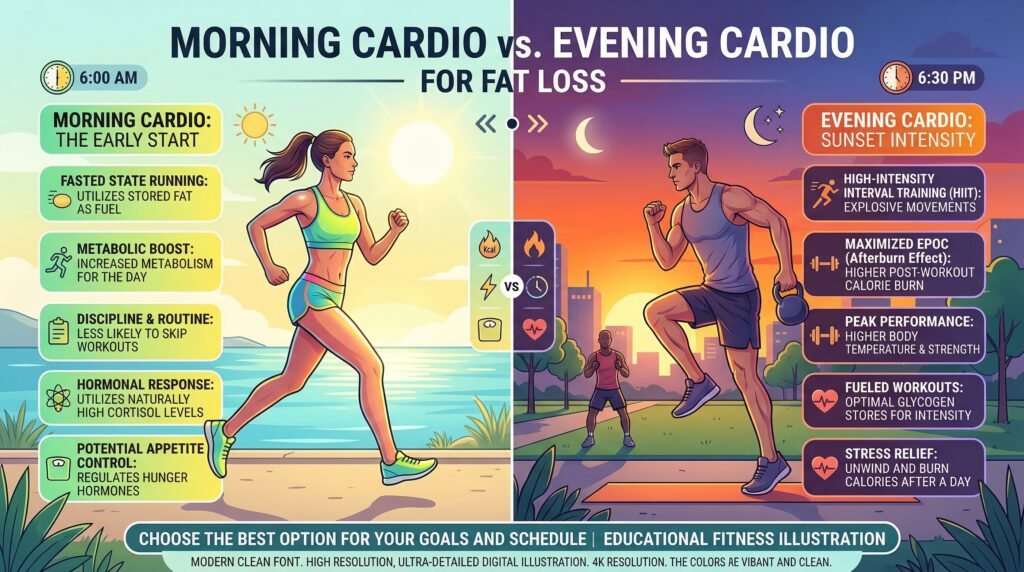
Cardio workouts play a major role in weight loss, fat burning, and overall physical fitness. Many people include cardio exercises such as jogging, cycling, jump rope, or HIIT training in their daily routine to burn calories and improve cardiovascular health. However, one common question among fitness enthusiasts is whether morning cardio or evening cardio is better for weight loss.
The timing of a workout can influence energy levels, metabolism, and performance. Some individuals prefer early morning workouts because they boost energy and improve discipline, while others perform better in evening sessions when their body is fully awake and fueled.
At GymPickr, we focus on helping individuals choose workout strategies that match their lifestyle and fitness goals. Understanding the benefits of both morning and evening cardio can help people design an effective workout routine that supports fat loss and long term health.
Understanding Cardio and Its Role in Weight Loss
Cardio exercise refers to any activity that increases heart rate and improves the efficiency of the cardiovascular system. Examples include running, cycling, jump rope workouts, and bodyweight cardio training.
When the body performs cardio exercises, it requires energy. This energy comes from calories stored in the body as glycogen and fat. Regular cardio workouts help create a calorie deficit, which leads to weight loss over time.
Consistent cardio training also improves endurance, strengthens the heart, and supports metabolic health. For individuals trying to lose weight, combining cardio workouts with proper nutrition and strength training produces the best results.
How Workout Timing Affects Fat Burning?
Workout timing can influence how the body uses energy during exercise. Hormone levels, body temperature, and energy availability change throughout the day.
Morning workouts may rely more on stored fat for energy because glycogen levels are lower after overnight fasting. Evening workouts, on the other hand, often allow higher workout intensity because the body has more energy from meals consumed during the day.
Both approaches can support weight loss, but the best choice depends on individual schedules, fitness levels, and consistency.
Morning Cardio for Weight Loss
Morning cardio workouts are popular among individuals who want to start the day with physical activity. Exercising early can boost metabolism and improve focus throughout the day.
Many people also find that morning workouts help them stay consistent because there are fewer distractions compared to evening hours.
Benefits of Morning Cardio
Morning cardio can activate the metabolism early in the day. This means the body may burn more calories throughout the day after completing the workout.
Early workouts also improve mental clarity and energy levels. Exercise stimulates the release of endorphins, which enhance mood and reduce stress.
Morning routines often promote discipline and consistency. People who train early are less likely to skip workouts due to work schedules or social commitments.
Fat Burning Potential of Morning Cardio
Some research suggests that fasted cardio performed in the morning may encourage the body to use fat as a primary energy source. This occurs because glycogen levels are lower after overnight fasting.
However, the difference in fat loss between fasted cardio and fed cardio is often small when overall calorie intake is considered.
Consistency and total calorie expenditure remain more important than workout timing alone.
Best Morning Cardio Exercises
Jogging or brisk walking outdoors
Jump rope workout for fat burning
HIIT cardio training at home
Cycling or stationary bike workout
Bodyweight cardio exercises like burpees and mountain climbers
Evening Cardio for Weight Loss
Evening cardio workouts are ideal for individuals who have busy mornings or feel stronger later in the day. Many people experience peak physical performance in the afternoon or evening.
Body temperature and muscle flexibility are often higher during the evening hours, which can improve exercise performance.
For individuals focusing on high intensity workouts such as HIIT or interval training, evening sessions may allow greater endurance and strength.
Benefits of Evening Cardio
Evening workouts often result in higher performance levels because the body is fully awake and fueled with nutrients.
Muscle strength and reaction time tend to improve later in the day, allowing individuals to train harder and burn more calories.
Evening cardio can also reduce stress after a long workday and improve mood.
Fat Burning Potential of Evening Cardio
Evening cardio sessions may allow individuals to perform longer or more intense workouts. Higher intensity workouts increase calorie burning and support fat loss.
Individuals who combine strength training and cardio in the evening often achieve effective body composition results.
Some people also experience improved sleep quality after moderate evening workouts.
Best Evening Cardio Exercises
High intensity interval training workouts
Treadmill running or incline walking
Cycling or spin workouts
Stair climbing workouts
Indoor cardio routines in small apartment spaces
Morning vs Evening Cardio: Key Differences
Morning cardio is often associated with consistency and metabolism activation, while evening cardio may provide better workout performance.
Morning workouts may help individuals develop disciplined fitness habits. Starting the day with exercise can create a sense of accomplishment and motivation.
Evening workouts, however, may allow the body to perform at higher intensity due to increased muscle flexibility and energy availability.
The effectiveness of either option depends largely on personal preference and long term adherence.
Factors That Influence the Best Workout Time
Choosing between morning and evening cardio depends on several lifestyle and physiological factors.
Work schedules often determine when individuals can exercise consistently. Some people may only have time in the early morning, while others prefer evening workouts.
Energy levels also play a role. Individuals who feel energetic in the morning may benefit from early workouts, while night owls may perform better later in the day.
GymPickr encourages people to experiment with both workout times to determine which option fits their routine and fitness goals.
Combining Cardio With Strength Training
For optimal weight loss results, cardio should be combined with resistance training.
Strength training helps build muscle mass, which increases metabolic rate. Higher muscle mass allows the body to burn more calories even during rest.
Simple exercises such as push ups, squats, lunges, and dumbbell workouts can complement cardio routines effectively.
Many fitness enthusiasts also use compact home gym equipment such as adjustable dumbbells or resistance bands to perform strength training at home.
Nutrition and Cardio Timing
Nutrition significantly affects workout performance and fat loss results.
Morning cardio may be performed in a fasted state or after a light snack such as fruit or oatmeal.
Evening workouts should ideally occur two to three hours after a balanced meal to provide sufficient energy.
Hydration is also essential for maintaining workout intensity and preventing fatigue during cardio sessions.
Cardio Workouts for Small Apartment Spaces
Many individuals perform cardio workouts at home due to convenience and limited gym access. Apartment friendly workouts can still deliver effective fat burning results.
Exercises such as jumping jacks, high knees, mountain climbers, and shadow boxing require minimal equipment and space.
HIIT routines are particularly effective for small apartment workouts because they maximize calorie burning in short sessions.
GymPickr provides practical fitness guidance for individuals building efficient home workout routines.
Pros and Cons of Morning Cardio
Pros
Helps build a consistent workout routine
Boosts metabolism early in the day
Improves mental focus and productivity
Fewer daily distractions or schedule conflicts
May promote fat utilization during fasted workouts
Cons
Lower energy levels for some individuals
Muscles may feel stiff without proper warm up
Limited time for longer workouts before work
Not suitable for night owls or late sleepers
Pros and Cons of Evening Cardio
Pros
Higher workout performance and endurance
Muscles are warmer and more flexible
Better strength and reaction time
Opportunity for longer workouts
Relieves stress after a busy day
Cons
Evening schedules may interfere with workouts
Fatigue from work may reduce motivation
Late workouts may affect sleep for some people
Gym crowds during peak evening hours
Common Cardio Mistakes That Slow Weight Loss
One common mistake is performing cardio at low intensity without increasing effort over time. Gradual progression is necessary to improve endurance and calorie burning.
Another mistake is relying only on cardio while ignoring strength training. Muscle development plays a key role in long term fat loss.
Inconsistent workout routines also prevent progress. Regular training combined with balanced nutrition produces the best weight loss results.
Tips to Maximize Cardio Results
Consistency remains the most important factor for successful weight loss. Performing cardio workouts regularly helps maintain calorie expenditure and improve fitness.
Incorporating HIIT workouts into weekly routines can significantly increase calorie burning.
Tracking workouts and setting fitness goals also helps individuals stay motivated and committed to long term health improvements.
GymPickr encourages people to create realistic fitness schedules that fit their lifestyle and personal preferences.
Conclusion
Both morning cardio and evening cardio can be effective for weight loss when performed consistently. The best workout time ultimately depends on individual energy levels, daily schedules, and personal preferences.
Morning cardio may help establish disciplined routines and activate metabolism early in the day. Evening cardio often allows higher workout intensity and improved physical performance.
Rather than focusing solely on workout timing, individuals should prioritize consistency, proper nutrition, and balanced training routines. By combining cardio workouts with strength training and healthy habits, anyone can achieve sustainable fat loss and improved overall fitness.
Frequently Asked Questions
Is morning cardio better for weight loss than evening cardio?
Both morning and evening cardio can support weight loss. The most important factor is consistency and maintaining a calorie deficit.
Can fasted cardio burn more fat?
Fasted cardio may increase fat utilization during exercise, but total calorie balance throughout the day plays a larger role in overall fat loss.
How long should cardio workouts be for weight loss?
Most experts recommend thirty to forty five minutes of moderate to high intensity cardio for effective fat burning
Can I do cardio every day?
Yes, but it is important to vary intensity levels and include rest or recovery days to prevent overtraining.
Should beginners do cardio in the morning or evening?
Beginners should choose the workout time that fits their schedule and energy levels to ensure consistency.
Fantastic write‑up. If you ever want to expand your resources, this site offers a free printable breakfast PDF based on your personal calorie needs: